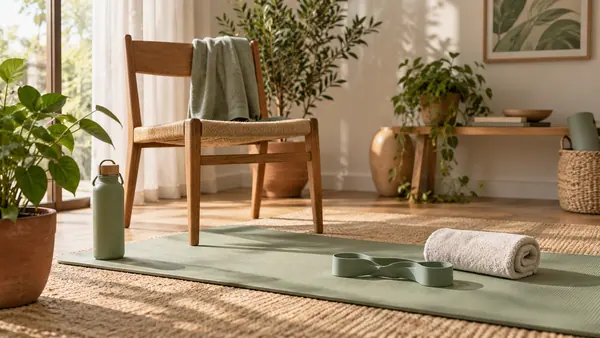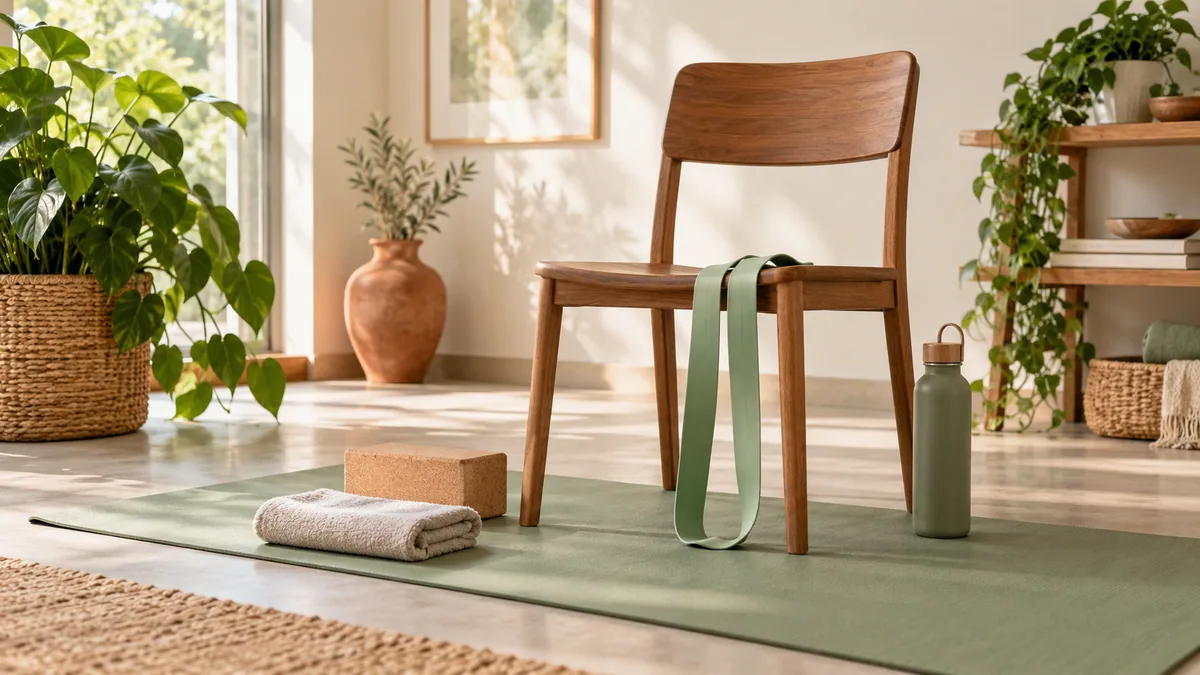
The muscles around the knee, hip and ankle help control everyday movements such as walking and climbing stairs. Exercises may support strength and function, but a generic list cannot identify the cause of pain or replace rehabilitation after an injury.
Check symptoms first
Seek urgent advice for severe pain, major swelling, a locked knee, inability to bear weight or a hot, red knee with fever. Pain after an injury may also need assessment. See NHS knee-pain guidance. Do not force a movement through sharp pain, worsening swelling or instability.
Seven movements to discuss or try when comfortable
1. Thigh contraction
Sit with a straight leg supported on a bed or floor. Place a small rolled towel under the knee, gently tighten the front of the thigh and press towards the towel. Hold briefly, breathe normally and release.
2. Straight-leg raise
Lie on your back with one knee bent and the other leg straight. Tighten the thigh of the straight leg, lift it a short comfortable distance and lower slowly. Stop if the movement causes knee or back pain.
3. Bridge
Lie with both knees bent and feet supported. Lift the hips a comfortable distance without arching the lower back, then lower with control. Keep the knees in a comfortable position.
4. Clamshell
Lie on your side with knees slightly bent and feet together. Open the top knee a short distance while keeping the pelvis still, then lower it. Begin without a resistance band.
5. Shallow wall sit
With your back supported by a wall and feet slightly forward, slide down only a small comfortable distance. Return slowly. Skip this option if it increases pain at the front of the knee.
6. Low step-up
Use a stable low step and nearby support for balance. Step up and lower slowly. Reduce the step height if you cannot control the movement. Do not use an unstable stool.
7. Gentle calf or hamstring stretch
For the calf, face a wall with one foot behind you and the back heel supported on the floor. For the hamstring, use a supported seated position and lean slightly from the hips. Aim for mild tension, without bouncing or forcing the knee.
Choose a starting point, not a full prescription
Try one or two comfortable options with a few controlled repetitions. There is no universal number of sets or automatic weekly progression for a painful knee. Check how the knee feels afterwards and the following day. Persistent symptoms call for an individual plan.
Deep squats, jumping and running are not inherently forbidden, but they may need modification during an irritable period. The home knee-pain exercise guide provides further context.
00