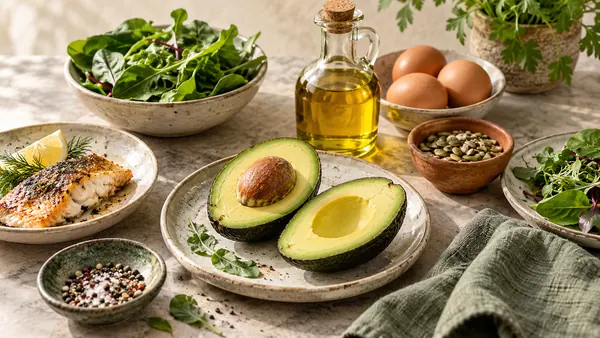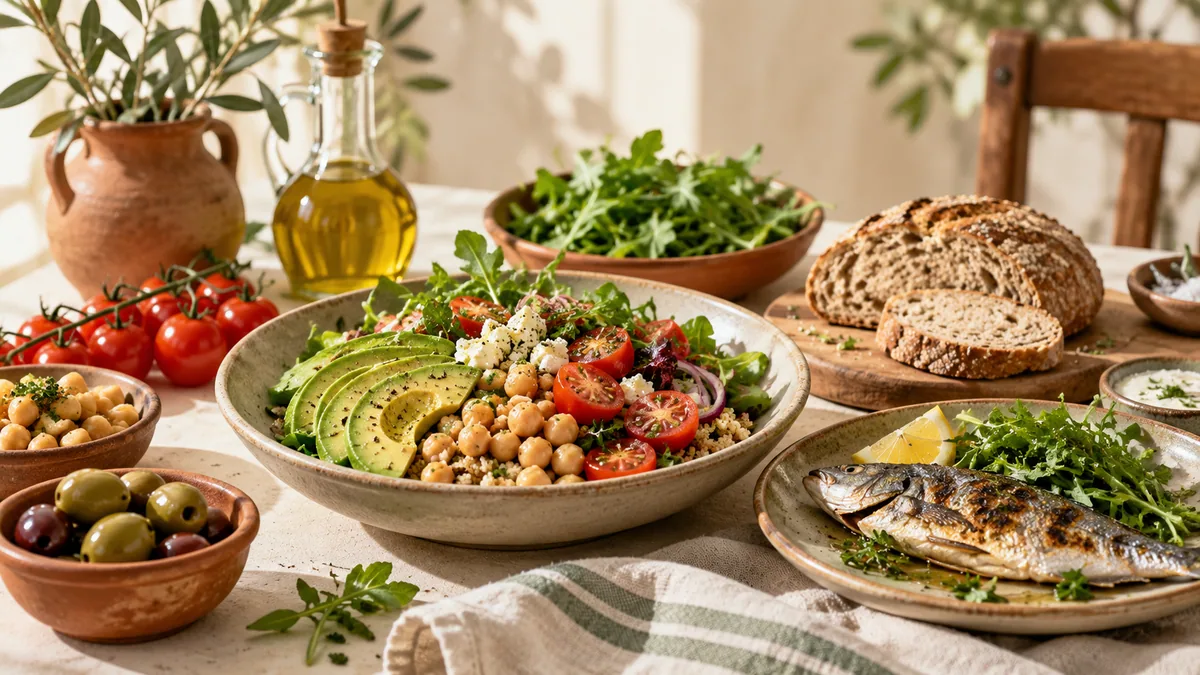
Mediterranean-style eating describes a food pattern rather than a rigid menu. It commonly emphasises vegetables, fruit, legumes, whole grains, nuts and olive oil, with fish and other protein foods. It does not require imported ingredients or promise weight loss, longevity or happiness for every person.
Adapt the pattern to your kitchen
Use beans or lentils in a familiar meal, add a vegetable side, or choose a whole-grain food you enjoy. Persian dishes can fit too: a bean-rich stew, herb rice with fish, or plain yogurt with herbs and walnuts can contribute different parts of the pattern.
Think about replacement, not just addition
Olive oil and nuts still provide energy. If replacing some butter with oil, consider the quantity rather than adding oil on top of the original recipe. Portions should fit your appetite, needs and any medical advice.
A simple first week
Choose one repeatable change: prepare a pot of lentils, keep frozen vegetables available, or plan a fish or bean meal. Review what was convenient and affordable before changing more. There is no single compulsory “Mediterranean” shopping list.
Further reading: American Heart Association: the Mediterranean diet.
00