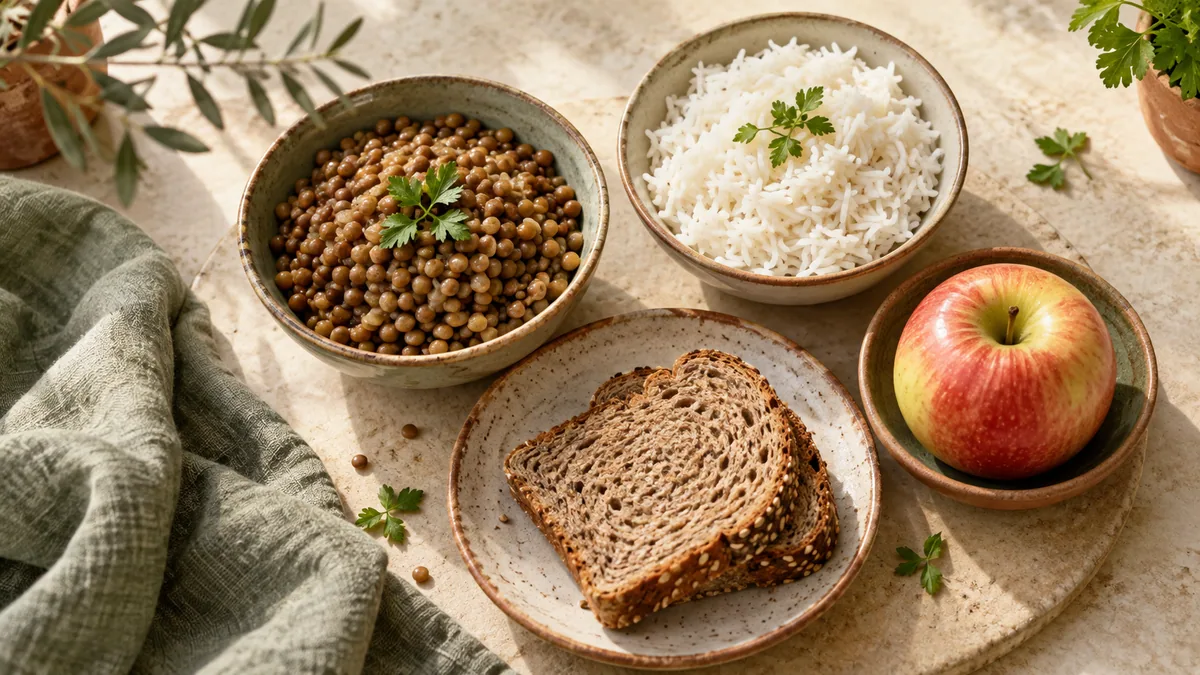
The glycemic index, or GI, compares the blood-glucose response to a carbohydrate-containing food with a reference under standardised conditions. It is not a direct reading of your personal response, and feeling sleepy after eating does not establish that GI is the cause.
How the categories are used
Common categories are low GI at 55 or below, medium at 56–69 and high at 70 or above. These labels are not a complete judgement of nutritional quality. A food can have a lower GI and still be high in saturated fat or provide few useful nutrients.
GI and glycemic load are different
Glycemic load also considers the amount of available carbohydrate in a serving. This helps explain why a food’s GI alone does not describe the impact of the portion you eat. It also means a “low-GI” label is not permission to ignore quantity.
Preparation and the meal matter
Processing, ripeness and cooking can change a food’s properties. A mixed meal also contains other components, such as protein, fibre and fat. Rather than assigning one universal effect to every rice, fruit or bread, consider the specific food, portion and preparation.
Practical ways to use the idea
- Include a variety of fibre-containing foods such as beans, whole grains, vegetables and fruit.
- Choose protein sources and fats as part of an overall meal, not as a trick to cancel carbohydrate.
- Compare similar foods and realistic portions.
- Use a food log to record what you ate, not to diagnose a blood-glucose response.
For diabetes care
GI can be one part of a discussion with a care team, but it does not replace carbohydrate guidance, glucose monitoring or medication advice. Do not change insulin doses from an AI food-quality score or a photo estimate. Individual responses vary.
For related food context, see our guides to fibre and blood glucose and calories and food quality.
00