Polycystic ovary syndrome, commonly called PCOS, can affect periods and other aspects of health. Insulin resistance can be part of the picture, but not everyone has the same symptoms or body size. Weight change is not a diagnosis, and difficulty managing weight is not a personal failure.
Build meals you can repeat
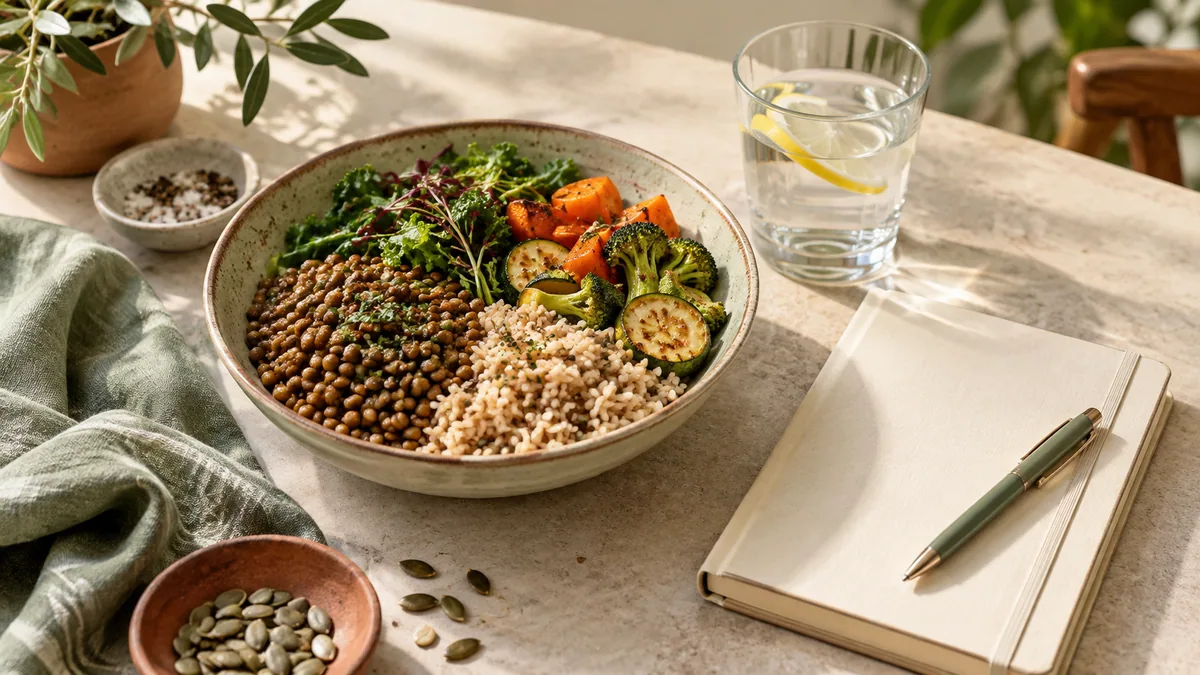
Start with regular access to food and a mix of vegetables or fruit, protein sources and carbohydrate foods that suit you. Beans, whole grains, eggs, yogurt, fish and other familiar foods can fit. There is no need to treat bread or every sweet food as an “enemy”. Food quality and the overall pattern matter more than a single meal.
Include movement you can sustain
Walking and resistance exercise can both be useful parts of a routine. One does not have to replace the other. Choose a starting level that fits your symptoms, preferences and current ability, and increase gradually rather than using exercise to compensate for eating.
Keep treatment separate from food rules
Lifestyle changes may support symptom management, but PCOS care may also involve medication or other treatment. Menstrual changes can have several causes and deserve an assessment. A clinician or registered dietitian can help adapt a plan when fertility, diabetes risk, medications or eating concerns complicate the picture.
Further reading: NHS information on PCOS.
00