Probiotics are live microorganisms that may provide a health benefit when used in an appropriate amount. That definition is more specific than “any fermented food”, and a result from one strain cannot be assumed to apply to every yogurt, drink or supplement.
Choose foods for what they are
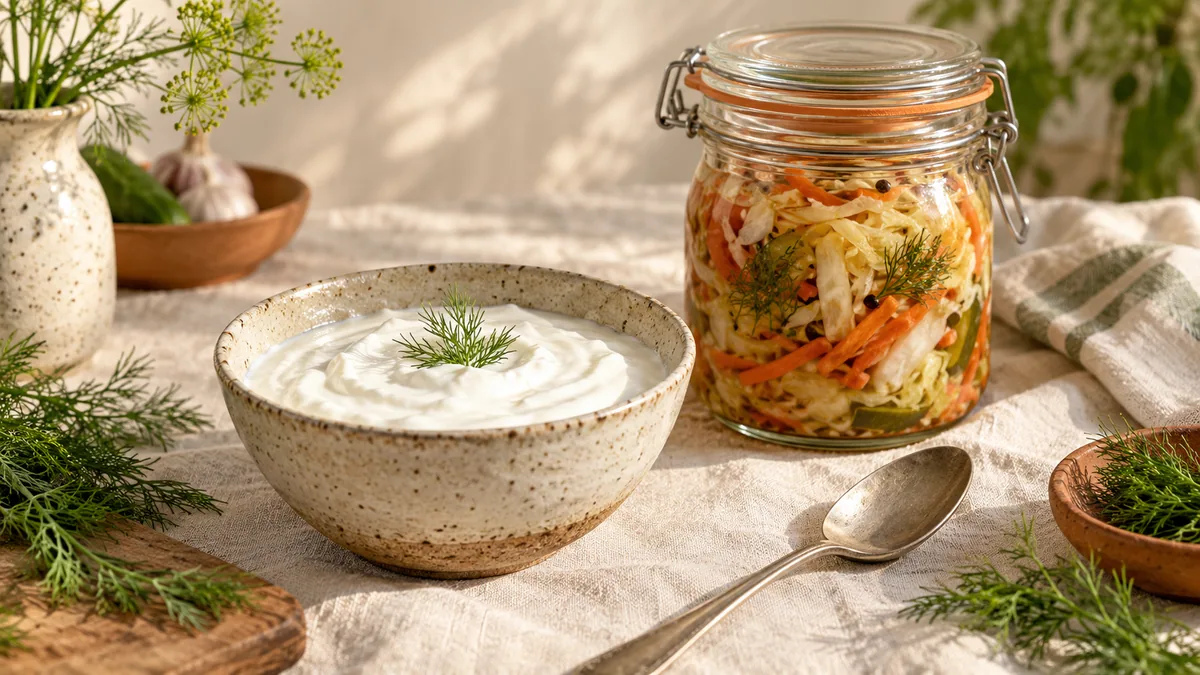
Yogurt, kefir and fermented vegetables can fit a varied diet if you enjoy and tolerate them. Some products are heated after fermentation or do not contain the organisms studied in research. Check the product rather than assuming a traditional or homemade food has a particular clinical effect.
Keep claims specific
A probiotic is not a general treatment for appetite, anxiety, inflammation or weight. Evidence and safety vary by the condition being studied. Fibre-containing foods can also support a varied eating pattern without needing a supplement claim.
Supplements need care
People with serious illness or weakened immune systems may face greater risks from probiotic products. Discuss supplements with a healthcare professional when those circumstances apply. Follow safe food-handling practices for homemade fermented foods.
00