Protein helps build and repair body tissues. It is an important part of a varied diet, but it does not make the other food groups unnecessary. Before buying a supplement, consider what your regular meals already provide.
Does 100 g of chicken mean 100 g of protein?
No. Food also contains water, fat and other components. Our reference for cooked skinless chicken breast contains 31.02 g of protein per 100 g. A 120 g portion therefore provides about 37.2 g. Raw chicken, fried chicken and other cuts need their own records.
Portion protein = portion weight × protein per 100 g ÷ 100. On a label, check whether the value is per serving or per 100 g.
Plant and animal sources
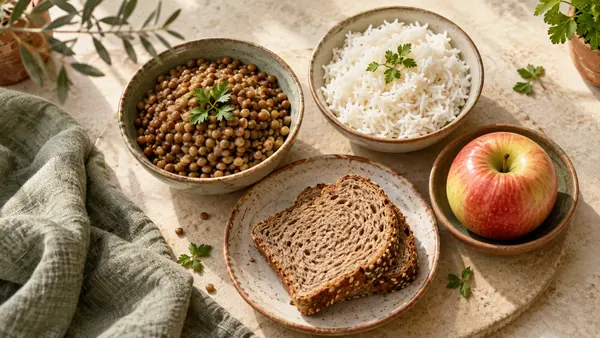
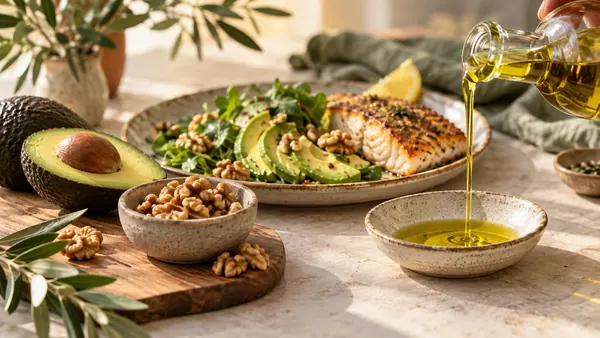
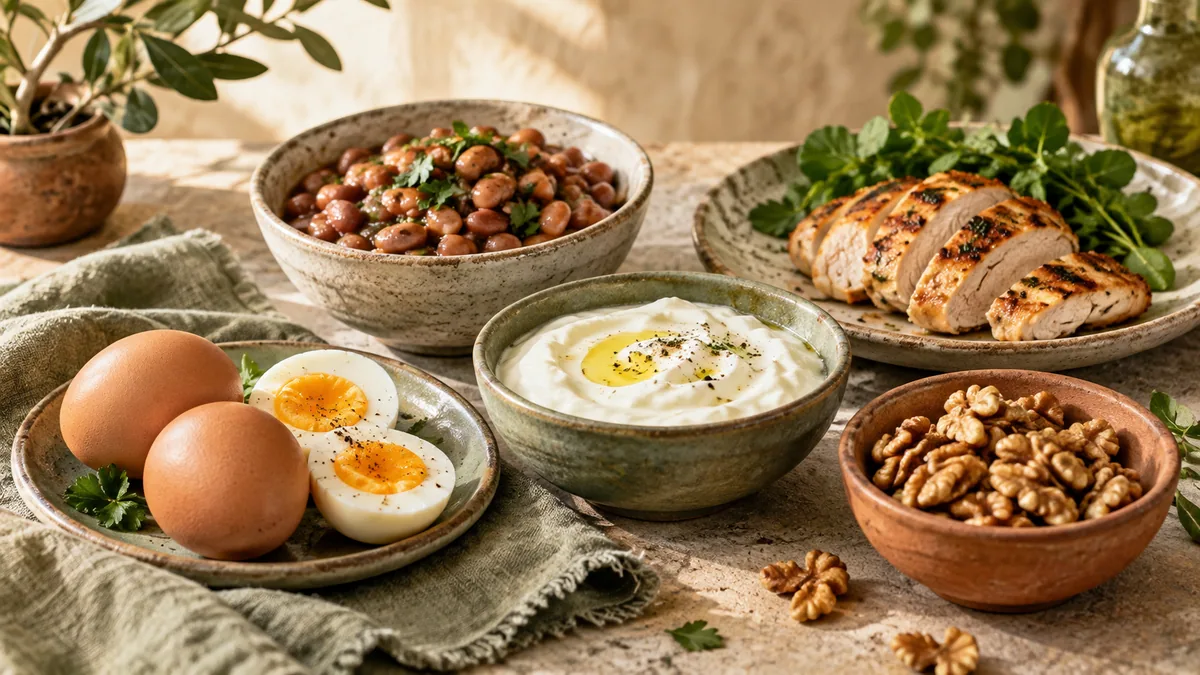
Beans, lentils, soy foods, nuts and seeds contribute protein, as do meat, fish, eggs and dairy. Choose sources that fit your preferences, budget and needs. Compare the whole food, including fibre, fat and salt, rather than protein alone.
A worked plate example
Combine 120 g of the chicken above with 150 g of plain cooked rice, which has 2.69 g protein per 100 g in our data. The chicken supplies 37.224 g and the rice 4.035 g: approximately 41.3 g in total. Sides are not included. This demonstrates calculation, not an ideal serving size.
If a mixed-dish entry already contains both foods, adding them again would double-count them.
Your daily needs
Needs depend on age, body size, activity and health. A protein calculator gives an educational estimate, not a prescription. Kidney disease and prescribed dietary restrictions require individual advice. Include fibre and variety alongside protein.
0Sources for this guide
- Protein in diet — MedlinePlus (See source)
- FoodData Central: data documentation — USDA (See source)