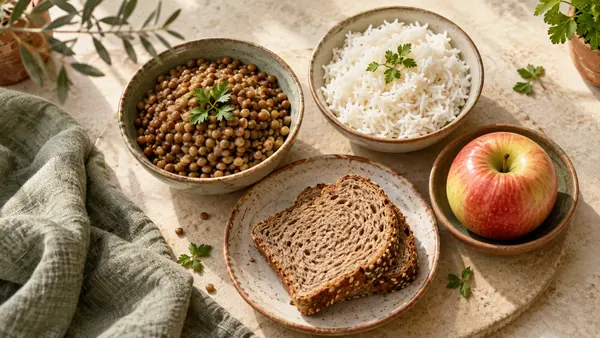
You can be physically hungry and want a particular food at the same time. Cravings are not a failure of willpower, and no home test reliably separates every kind of hunger.
Four questions to consider
- When did I last eat, and was it enough?
- What physical sensations do I notice?
- What is happening emotionally or around me?
- What choice would meet my needs and feel satisfying?
Take a few minutes only if useful. If you are hungry, eat; you do not need to pass a test or wait for a timer. Water and distraction should not replace food your body needs.
Why the “apple test” falls short
Not wanting an apple does not prove that you are not hungry. Preferences, food availability, previous restriction and the need for a more substantial meal all affect what sounds appealing.
Make the next meal practical
A meal can include carbohydrate, protein, fat and a fibre-containing food without being perfect. If a long gap repeatedly leaves you intensely hungry, planning an accessible snack may help more than trying to suppress the feeling.
When support matters
Repeated loss of control around food, secrecy, distress or compensating through restriction or excessive exercise deserves professional support. Do not respond by making the rules stricter. See NIDDK information on binge-eating disorder and our emotional eating guide.
0Sources for this guide
- Binge Eating Disorder — National Institute of Diabetes and Digestive and Kidney Diseases (NIDDK) (updateable)
- Eating disorders: recognition and treatment — NICE Guideline NG69 (2020)
- Mindfulness-based interventions for weight loss: a systematic review and meta-analysis — Obesity Reviews / PubMed (2018)